Add your promotional text...



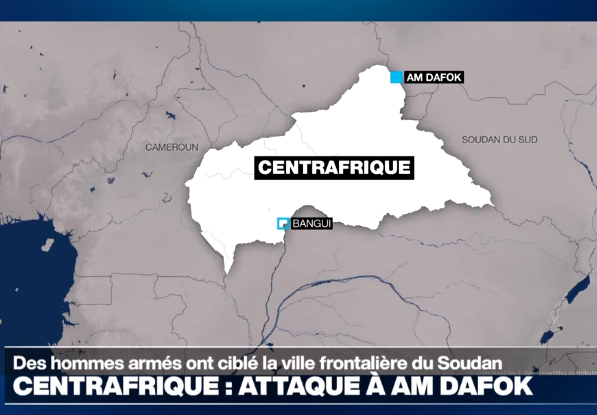
Am Dafock: Conditions Remain Dire
By Marie Pierre Coppens | LNC
(Bangui, July 20, 2026 | LNC) I have just returned from Am Dafock, in the Vakaga region near the Sudanese border. The Russians and the FACA are busy posturing there; naturally, the rebels have left, yet Bangui continues to lie about the situation, claiming the town is under control—which is simply not true. Why did Moloua come here? To deliver speeches and make promises he will never keep. Meanwhile, due to a total lack of resources, the population is fleeing to Birao—some 60 km away—in hopes of a better future; over 2,000 people have already left. On the ground, nearly 20,000 people are squatting at the former MINUSCA base, which was recently set ablaze by Russian helicopters. As for the FACA troops—those who didn't flee the assault by the Alliance for Patriotic Resurgence (ASP) rebels—they are loitering in the town, and the humanitarian situation remains deeply concerning. From the window of her bamboo hut in Birao, Alima watches her children—blissfully unaware of the gravity of the situation—playing in the yard. She had fled Am Dafock just a few days earlier and is in despair: "We walked 60 kilometers to get here. Our lives are a living nightmare. There is no food or drinking water in Am Dafock. Our children are sick, but there is no medical care. We are living like animals." Nearby, Souleymane is transporting jerrycans and bundles of firewood on a donkey. He is looking for a way to provide for his young family. "We sleep under scraps of cloth, large plastic bags, and old tarps." "When it rains, entire families—children included—are left out in the downpour. I have to sell bundles of firewood just to hope to earn enough to feed my family," he explains. As for the other residents—those who didn't flee to Birao—they are either squatting at the MINUSCA camp or hiding in the bush. Thierry Evariste Binguinendji, Governor of the Fertit region, maintains that measures have been taken to assist displaced persons: "As we speak, the town is calm and secure. Humanitarian workers have really mobilized quickly. In Am Dafock, they are hard at work helping the local population." So, according to him, everything is fine—though he is certainly the only one saying so. But let us not be cynical; since the Prime Minister’s visit to Birao, a development hub has been inaugurated—an initiative that prompted Maïmouna Hamza, a woman wearing a hijab with a baby strapped to her back, to say: "Our region was neglected by the authorities for decades. We endured years of instability, with an absent State, a lack of basic social services, and limited humanitarian access. Today, we thank the authorities and their partners for thinking of us." Thanks go to the UN, certainly not to the government that is reaping the benefits.
LNC
Date: July 20, 2026
Photo montage: LNC
Copyright © 2013-2026 All rights reserved: LAMINE MEDIA