Add your promotional text...



IMF and Economic Reforms in the Central African Republic
By Albert FALL | LNC Translated into English by Karen Ann SULLIVAN l LNC
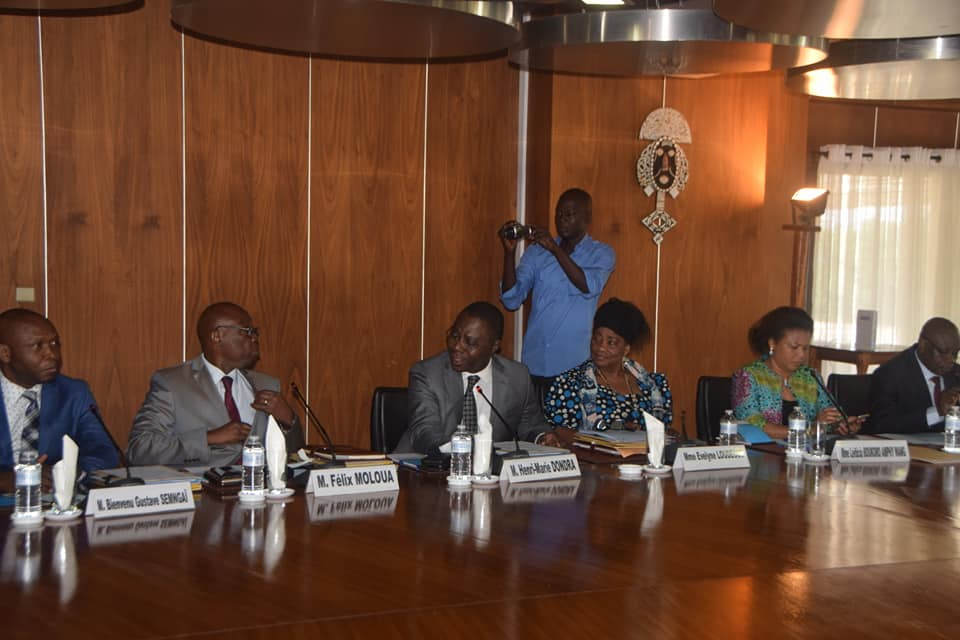
(Bangui, 21 April 2026 – LNC) It is important to note that the International Monetary Fund (IMF) lends money to countries, but does not simply hand it out; rather, it lends money on its own terms. It usually monitors the implementation of countries’ economic programmes and offers advice; for this reason, the CAR, which is always in need of funds, has an interest in staying in the IMF’s good books. Consequently, it keeps the IMF informed of its economic progress. In this regard, the authorities of the Central African Republic have approached the IMF to request an extension for the implementation of its economic programme, which was theoretically due to end in June 2026. The request was made on 17 April 2026 by the Central African Minister of Finance, Hervé Ndoba, during bilateral talks held on the sidelines of the spring meetings of the Bretton Woods institutions and the World Bank in Washington. During this meeting, the government official outlined “the need to extend the timeline in order to complete several structural reforms that are still incomplete”. To be more specific, the economic programme in question, supported and financed by the IMF and the World Bank (given that the CAR is penniless), and to use their technical terminology, “supported by the Extended Credit Facility (ECF)” and launched in April 2023 for a period of 38 months, amounts to 107 billion CFA francs (approximately 191.4 million USD), and this would be a breath of fresh air for an economy that is, let’s face it, very fragile, and in any case, the implementation side of things is already running late! And these IMF sleuths are not content with the minister’s words; they go further, noting that among the reforms deemed crucial but insufficiently implemented are measures in public finance management and the hydrocarbons sector, two areas regularly identified as points of weakness. And the negative findings do not stop there; in previous assessments, the Bretton Woods institution had already painted a mixed picture. summarised in a statement published in June 2025, which stated that “only three of the six quantified performance targets for 2024 had been met, highlighting delays in key objectives such as the domestic primary deficit and net domestic financing. To put it bluntly, the Central African side has botched the job! ‘Despite these shortcomings, the Central African authorities were keen to reaffirm their commitment to pursuing reforms.’ YEAH RIGHT! Thanks to the economics department at LAMINE MÉDIA in Paris (France) for the details.
LNC
Date: 21 April 2026
Copyright © 2013–2026 All rights reserved: LAMINE MEDIA